No products in the cart.

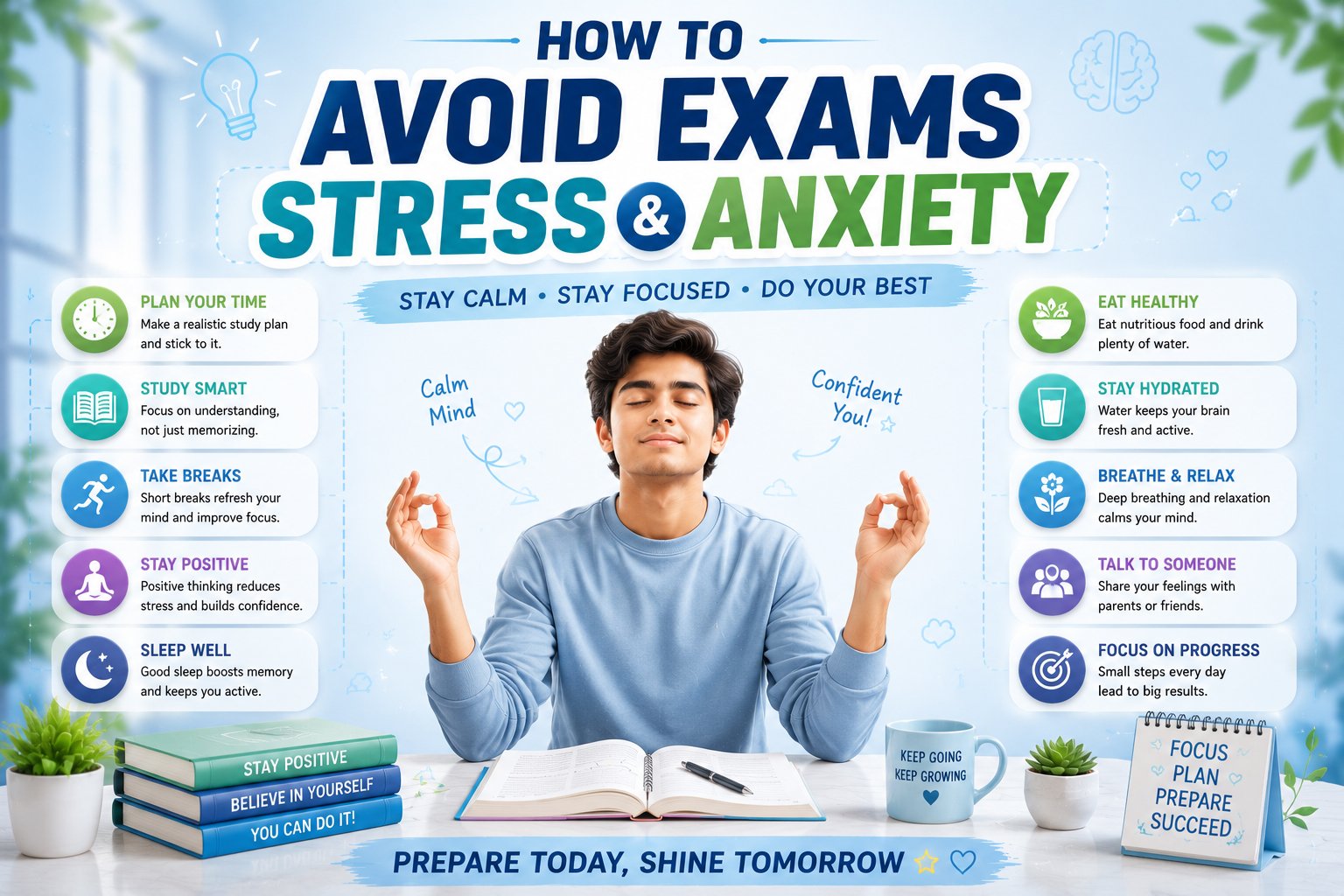
Avoid exam stress anxiety by preparing early, following a study plan, and maintaining healthy habits. Many students feel nervous before exams, but excessive stress can affect concentration, memory, and confidence. The good news is that exam anxiety can be managed with the right approach.
Exam stress usually develops because of:
Understanding the cause of stress is the first step toward solving it.
One of the best ways to reduce exam anxiety is to begin studying well before the exam date.
Students who prepare early can:
Early preparation reduces pressure and improves performance.
A study timetable helps students stay organized.
Your schedule should include:
A clear plan prevents panic and keeps preparation on track.
Instead of thinking about the entire syllabus, divide it into smaller sections.
For example:
Complete Biology syllabus.
Small achievements increase motivation and confidence.
Model papers help students:
Students who regularly solve practice papers usually experience less exam fear.
Revision strengthens memory and prevents forgetting.
A simple revision strategy:
Within 24 hours of learning.
After one week.
Before the exam.
Regular revision makes information easier to recall during tests.
Sleep is essential for:
Students should aim for 7–9 hours of sleep each night, especially during exam season.
Studying continuously for long periods can cause mental fatigue.
A simple method:
30–45 minutes
5–10 minutes
Short breaks help refresh the brain and improve focus.
Physical health affects mental performance.
Students should:
Healthy habits improve concentration and reduce stress.
Every student learns at a different pace.
Comparing marks, study hours, or progress with classmates often creates unnecessary pressure.
Instead, focus on:
Negative thoughts increase anxiety.
Replace:
❌ “I will fail.”
With:
✅ “I am preparing well and doing my best.”
Positive thinking improves confidence and motivation.
Repeat several times.
A brief walk can:
Soft instrumental music during breaks can help students relax and recharge.
Al-Razi Publications provides student-friendly study resources designed to simplify exam preparation and improve confidence.
These books help students:
Good preparation naturally helps students avoid exam stress anxiety and perform better in examinations.
Creates panic and confusion.
Makes exams more stressful later.
Reduces memory and concentration.
Leads to mental exhaustion.
Weakens confidence and motivation.
Students who want to avoid exam stress anxiety should focus on preparation, revision, healthy habits, and positive thinking. Exams are important, but they do not define your worth. Stay organized, trust your preparation, and do your best.